Asbestos Surveys in Hertfordshire and Essex
Why are asbestos surveys important?
The most important things that an asbestos survey enables you to do are:
-
Identify the presence of asbestos: asbestos surveys help to identify the presence of asbestos-containing materials (ACMs) in a building.
-
Assess the risk of exposure: surveys also assess the risk of exposure to asbestos fibres. This is important because the risk of exposure depends on the condition of the ACMs and how they are being used or disturbed.
-
Plan for safe removal: If asbestos is identified in a building, an asbestos survey can help to plan for safe removal or management of the ACMs. Improper removal or handling of asbestos can release fibres into the air and increase the risk of exposure.
-
Compliance with regulations: Asbestos surveys are required by law in the UK.
Global Environmental are experts with an excellent reputation for delivering asbestos surveys on time and with the minimum of disruption. Their headquarters is in Sawbridgeworth on the Hertfordshire/Essex border. They work in Herts, Essex, London and throughout the UK.
They have a wide range of experience, so can also help with whatever needs to be done as a result of the survey. This might be writing and maintaining an Asbestos Management Plan to define the procedures for controlling asbestos-containing materials in a building. If work is planned on the building, including demolition, then it is essential that the asbestos is removed. Global can assist with the project management to achieve this as quickly and cheaply as possible.
Why choose a local asbestos survey company?
Choosing an asbestos survey company that regularly works throughout Essex and Hertfordshire offers practical advantages. Local surveyors can respond quickly, are familiar with the wide variety of commercial, industrial and residential buildings found across the region, and understand the types of asbestos-containing materials commonly encountered in properties built during the post-war construction boom.
Whether you require a Management Survey to comply with your duty to manage asbestos or a Refurbishment and Demolition Survey before building work begins, they provide prompt appointments, detailed reports and practical advice to help your project proceed safely and efficiently. All surveys are carried out in accordance with current HSE guidance and the Control of Asbestos Regulations 2012.
Managing people's concerns
Everyone knows that asbestos is dangerous: many people completely fail to understand when and how it is dangerous. They do not understand that if the asbestos-containing material is stable and secure, then the asbestos fibres cannot be released into the atmosphere, and there is no risk.
Unfortunately, rumours can spread more quickly than the truth, and some people love to exaggerate, or invent, a problem. That's why it is important to manage people's concerns about an asbestos survey. Here are some of the ways that can be done:
- Communicate clearly what is being done, and why, and how the results will be shared
- Communicate clearly what the risks are, and what they are not.
- Use a survey company that minimises the disruption it causes and will work closely with the premises management team
- Use a survey company that can conduct the survey outside of normal working hours.
Of course, Global Environmental meets all these criteria.
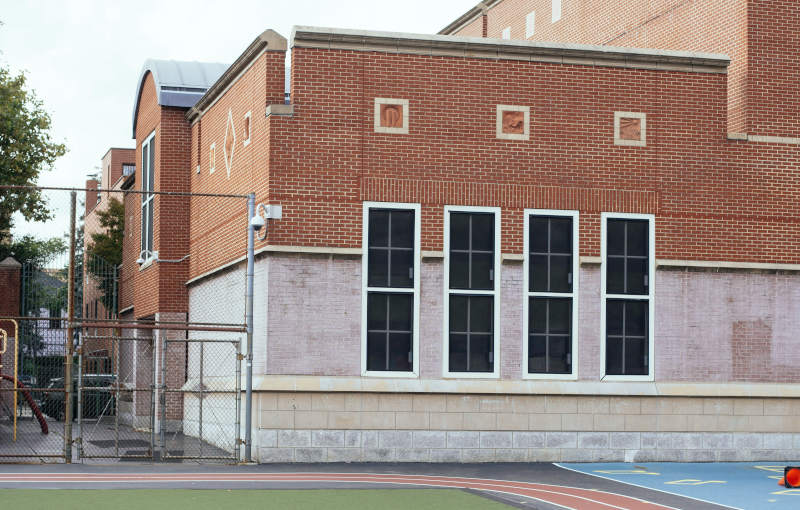
Is this building an asbestos hazard?
A survey will tell you.
What types of buildings in the UK can contain asbestos?
In the UK, asbestos-containing materials (ACMs) were commonly used in construction before their use was banned in 1999. As a result, many types of buildings constructed or refurbished before this date may still contain asbestos. Below are the key types of buildings where asbestos might be present:
Residential Buildings
- Houses and Flats (Built Pre-2000):
- Roofing materials, such as asbestos cement sheets.
- Textured coatings, like Artex ceilings and walls.
- Pipe lagging and insulation in lofts or basements.
- Floor tiles, adhesives, and backing boards.
- Council Housing and Housing Associations:
- Older properties managed by councils or housing associations often contain asbestos in areas like fire doors, partition walls, and riser cupboards.
Commercial Buildings
- Office Buildings:
- Insulation around boilers, pipes, and ducts.
- Suspended ceilings and partition walls.
- Fireproofing materials in structural beams.
- Retail Spaces:
- Shops and shopping centres may have asbestos in ceiling tiles, flooring, or old heating systems.
- Warehouses and Factories:
- Roofing, walls, and structural insulation.
- Lagging for industrial boilers and machinery.
Public Sector Buildings
- Schools and Colleges:
- Asbestos was widely used in schools, especially in ceiling tiles, insulation boards, and partition walls.
- The Health and Safety Executive (HSE) highlights that many schools built before 2000 still contain asbestos.
- Hospitals and Healthcare Facilities:
- Insulation for heating systems.
- Flooring and ceiling materials in older facilities.
- Council Buildings:
- Public libraries, offices, and community centres may have asbestos in walls, roofs, and floors.
Industrial Buildings
- Factories and Plants:
- Machinery insulation, roofing materials, and fireproofing systems often contained asbestos.
- Power Stations:
- Materials resistant to high temperatures in turbines, boilers, and pipework.
Agricultural Buildings
- Barns and Sheds:
- Roofing and cladding panels made of asbestos cement.
- Insulated pipework for heating systems.
- Greenhouses:
- Asbestos cement panels and roofing sheets.
Transport-Related Buildings
- Railway Stations and Depots:
- Insulation for boilers and in structural components.
- Airports:
- Fire-resistant materials in terminals and hangars.
Do you need more information?
There are various reliable sources of information about the risks of asbestos.
The Health and Safety Executive
The HSE has a section on its website dedicated to asbestos. Sections include:
- Introduction to asbestos safety
- Duty to manage asbestos in buildings
- A worker's guide to asbestos safety
- Asbestos essentials task sheets
The site is written in clear, simple English.
The National Organisation of Asbestos Consultants.
NORAC - the National Organisation of Asbestos Consultants exists to improve the technical knowledge of all those working with asbestos: surveying and testing organisations, local authorities, clients, and duty holders.
North Hertfordshire Council
The council has a helpful page on their website about the risks of asbestos and how to manage them.
Essex County Council
On their Love Essex site Essex County Council have a page about the basics you need to know about asbestos, and a link to use the council to dispose of asbestos, if it is from your household in Essex.
Asbestos Victim Support Group
The Asbestos Victim Support Group Forum brings together groups throughout the UK which provide free and independent support to people with asbestos-related diseases.